Your cart is currently empty
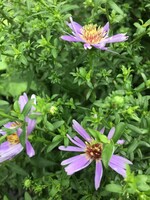
Now officially know as Symphyotrichum novae-angliae but we are still calling it an aster, its so much easier to say. Great for naturalizing and for rain gardens. Grows to 3-6' tall in full sun.
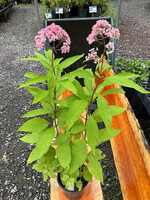
A great native choice for those ornamental grass screens, accents, or border planting. Attractive foliage all year round and beautiful pink flower panicles that bloom in summer.
A Southeast native hibiscus that produces bright red flowers from June through fall. The foliage is deeply lobed into 3,5, or 7 lobes. Hummingbirds, bees, and butterflies are attracted to the blooms. The stems are also great for nesting/overwintering
A cute little ground cover with soft, fuzzy leaves. The soft hairs give the green foliage a silver hue. Summer brings spikes of light purple flowers. This is a great choice for sunny, dry gardens, where you don't want to do a lot of maintenance.
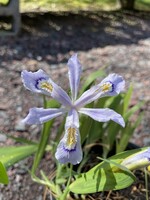
A native herbaceous perennial that can be found growing in rocks, barrens, bluffs, and rocky slopes.
Helleborus, 'Spring Sparkle Red' has large, deep red flowers with yellow stamens, making it great for early spring color. This plant works well both as a border plant and in a container.
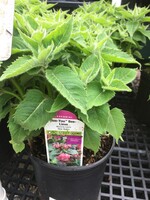
Claire Grace' has tubular pin cushion-like soft to deep lavender colored flowers that bloom in the early to late summer. This plant's flowers attract both butterflies and hummingbirds, and it has aromatic foliage that can be used for teas.
Tradescantia ohiensis is a clump-forming herbaceous perennial that has bluish green grass-like leaves with blue flowers that bloom from late May into early July.
Hairy beardtongue is a compact, flowering, herbaceous plant that features clusters of lavender to violet flowers which bloom from May to July. This plant is an important source of nectar for bumble bees.
Downy lobelia is a perennial herbaceous wildflower native to the eastern and south-central United States. Blue flowers with white to pink centers first appear in late summer and continue into mid-fall. Toxic to humans if ingested.
Winterbells Hellebore features creamy white cup-shaped flowers with chartreuse centers that bloom from early to late winter, eventually turning rose-colored. The foliage is a bluish-green, and the stems are an attractive coppery bronze.
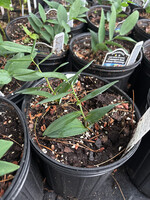
Carex woodii, or Woods Sedge, is a native sedge with blue-green foliage early in the season, which turns rich green as the plant matures.
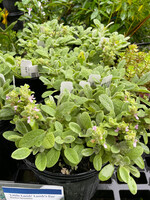
The Hairy Mountain Mint has white flowers with purple spotting from mid to late summer. The flowers are quite attractive to pollinators, and the leaves are known to be very aromatic when crushed.
Campanula americana, commonly called tall bellflower, is native to eastern North America. In biennial mode, it produces only a low-growing basal rosette of leaves in the first year and light blue, star-shaped, five-lobed flowers in the second year.
A hidden gem! The blooms will dazzle you from July to September and provide pollinators with a steady source of food. It is a very tolerant plant and works great in those hard to deal with areas! An added bonus - it's highly deer resistant!