Your cart is currently empty
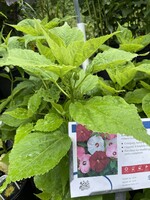
This a leafy perennial grown for its edible stems that are used most commonly in pies. Grows 2-4 feet tall with large leaves and red stems.
A spreading deer resistant ground cover that is easy to grow. Showy magenta flowers complimented by red sepals in late spring and fragrant foliage all make this a nice choice!
The robin's plantain has aster-like white to pale violet flowers that blooms from April to June. A common species in North America. Attracts pollinators and good as a groundcover.
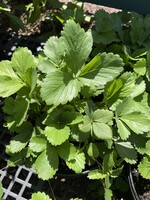
A herbaceous ground cover that spreads by stolons. Toothed foliage typical of strawberries with white flowers with yellow centers in spring. Produces edible fruit after flowering.
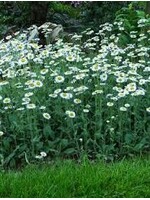
A great drought tolerant daisy that features white petals with green centers. Waxy green foliage looks great with or without the flowers!
Heuchera americana, commonly called coral bells or alumroot, is a perennial native to eastern and central North America. This plant has heart-shaped leaves and tiny greenish-white bell-shaped flowers in the late spring to early summer.
Huge blooms at 8 inches make a big statement on this perennial! A mix of red, pink, and white cover the dark green foliage from mid summer to fall. Attracts many types of pollinators but it is a favorite to butterflies.
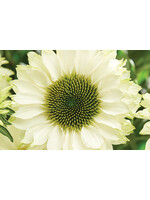
A semi-double flowering coneflower that start white and fade into a lemon yellow. A good addition to sunny beds or cut flower gardens.
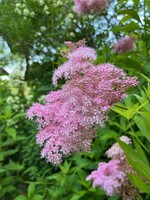
A native to wet moist areas this perennial flowers with can't miss pink clusters of flowers. Blooms are similar in appearance to Astible. Great for pollinator rain gardens.
Small tidy clumps of silvery blue blades make this sedge a nice addition to the garden that will fit and grow in most spots. A great choice for bed borders, along walkways, or planting in mass.
Single daisy-like flowers bloom in sunset-esque shades. Buds emerge red and open orange, fading to a creamy butter yellow. Colors are best in the cool parts of the year—which happen to be when the plant usually flowers.
A nice compact aster that produces light pink flowers with yellow centers. A great choice for a late season pollinator plant! Loads of bees and butterflies flock to 'Woods Pink' at the nursery.
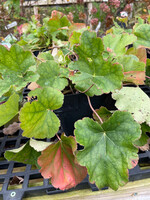
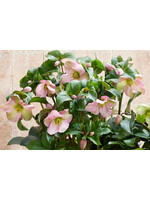
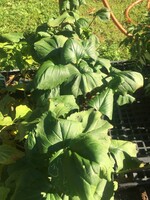
'Fusion of Fire' has very large green leaves that turn a brilliant red color in the fall and sprays of light pink flowers that bloom in the spring. Performs best in an area that has moderate to consistant moisture.
Berlandiera lyrata, aka the Chocolate Flower gets its name because the flowers smell like chocolate. This is an herbaceous perennial that is native to the Southwestern USA and Mexico that has daisy-like flowers which are yellow with maroon-brown centers.
The Fire Pink is an herbaceous perennial that features attractive red flowers that bloom in late May to early July. The plant attracts hummingbirds and butterflies when in bloom. Classified as endangered in FL, MI, and WI.
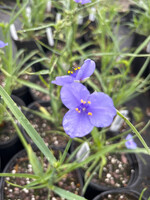
Tradescantia ohiensis is a clump-forming herbaceous perennial that has bluish green grass-like leaves with blue flowers that bloom from late May into early July.
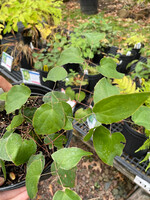
Epimedium × rubrum, commonly called red barrenwort, is a cross between E. alpinum and E. grandiflorum. This plant has red and yellow flowers, which bloom in the spring, as well as medium-green, heart-shaped foliage.
A great ground cover that works wonderfully in those hard to plant dry shady areas! New leaves are a beautiful maroon that will transition into a glossy dark green in summer. Spring produces creamy flowers that stand out against the dark foliage.
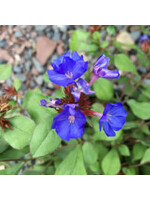
The electric blue flowers on this groundcover are outstanding from July to September. The fall color is bronze-red. Grows to about 6-8" tall and spreads in full to part sun.
Good for shady wet areas to provide a nice pop of color. Has tall feathery pink blooms on reddish stems. Grows to only 2 feet tall and wide with a mounding habit.
Whether you call it senecio or Packera it's still Golden Groundsel to us. This plant produces masses of yellow daisy like flowers held well above the shiny green leaves. Spreads and naturalizes nicely as a ground cover. Attracts loads of pollinators. Grow