Your cart is currently empty
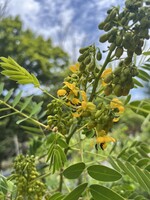
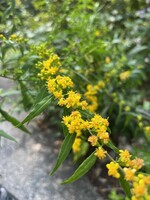
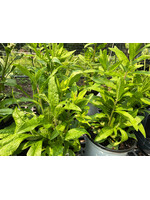
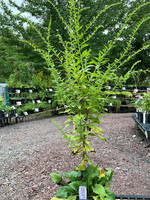
The Grayleaf Goldenrod is an herbaceous perennial that features yellow flowers which bloom in the late summer to late fall. The leaves turn gray/silver in the fall.
Awesome plant for bees and butteflies! Small golden yellow blooms on thin leafed foliage. A fragrant plant that is known for smelling like anise when the leaves are crushed.
A firework display of vibrant yellow flowers on long arching stems really do a put on a show late in the season. Usually blooming in September Goldenrod adds not only beauty to the garden but late season pollinator food too!
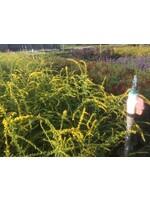
Goldenrods often get a bad name since they get blamed for allergies but they are rarely the culprit, its usually ragweed that blooms at the same time. This variety is a nice compact plant that only grows to 10-12" tall. Bright lemon yellow flower spikes a
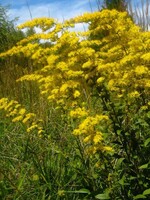
Solidago rugosa, commonly called rough goldenrod, rough-stemmed goldenrod or wrinkle-leaved goldenrod, is a native plant that has bright yellow flowers in late summer to fall (August to October). This plant is very attractive to bees and butterflies.
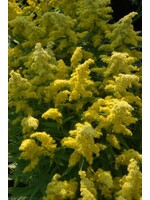
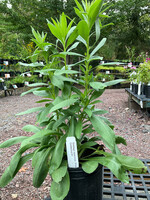
Solidago speciosa, commonly called showy goldenrod, is a native plant of Eastern North America. As the name suggests, this is one of the showiest of all goldenrods.
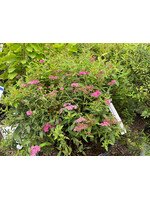
An improved version of the classic spring-blooming spirea. Every spring, landscapes everywhere are graced with romantic white-flowering spirea like this one.
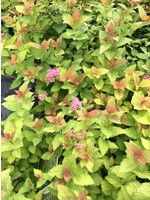
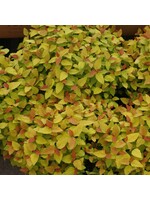
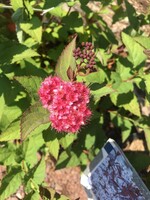
From Proven Winners: This spirea is better than great - it's a doozie! Spirea is an old landscape staple, so what could one do that could possible earn it superlatives? Well, seedless and non-invasive would be a start; non-stop blooming would be ev
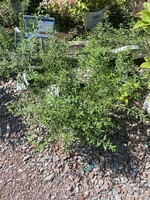
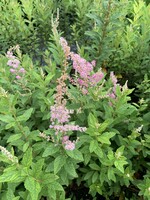
A native Spirea! Prefers moist to wet soil and can grow 2-4' tall and a little wider. Works great in rain gardens or as a hedge in moist spots. Butterflies love it and deer do not.
This native grass does great in hot dry conditions. Forms a nice mound of fine textured deep green foliage. Looks great in mass plantings! Produces seed heads that are enjoyed by birds. Really nice fall and winter color.
This lamb's ear has the biggest, wonderfully velvety soft silver foliage. The foliage adds a great different texture to a border. Deer and rabbit resistant. Only grows 8-10" tall.
Perennial Plant of the Year 2019 This Stachys was ranked the highest at the Chicago Botanical Gardens Plant Evaluation Trials. Great flower production, vigor, habit and winter hardiness. Nice puckered clean foliage all season. Grows to 18-24" tall in ful
A cute little ground cover with soft, fuzzy leaves. The soft hairs give the green foliage a silver hue. Summer brings spikes of light purple flowers. This is a great choice for sunny, dry gardens, where you don't want to do a lot of maintenance.
This is a small understory tree that can be planted in the shade! Bladdernut produces clusters of white bell-shaped flowers in the spring, usually around April/May. After the spring bloom, it starts working on the seeds.
A picturesque tree with multi season interest. Spring has cup shaped white blooms with golden yellow centers, summer boats dark green foliage, fall provides showy fall color, and winter gives the exfoliating bark a chance to shine.
The Stokesia laevis 'Peachie's Pick' has cornflower-like flowers that are violet with a yellow center. Flowers bloom from early to mid summer, and occasionally into early fall. This plant loves full sun.
Bearing large 3-4 inch periwinkle flowers in mid summer through fall this is a great late season addition to your garden. Continuously blooming flowers sit atop grass green foliage.
This is a native poppy that thrives in woodland settings. Grows to 12-18" tall. The ideal location has sun in the spring and then shaded through the rest of the summer.
A nice midsized tree that produces fragrant white bell shaped flowers in late spring early summer after the leaves have already emerged. Attractive large dark green oval shaped foliage in summer.
A native shrub that produces white berries that often persist into winter, unless the birds get to them first!
Coralberry is known for its pink berries that often persist into the winter, adding color and interest to the winter landscape. The blooms are small and insignificant but they are loved by pollinators.
Standing out from the rest of the asters 'Snow Flurry' is a low growing ground cover cultivar. Only getting to be 4-6 inches tall but spreading beautifully around rock gardens, garden borders, or any hard to plant sunny dry area.
The Smooth Blue Aster is a deciduous herbaceous perennial that has violet to purple flowers with yellow centers which bloom from early to mid fall.