Your cart is currently empty
This hybrid yarrow has attractive fern-like silver grey foliage that stays compact. The overall size of the plant is 1-2' tall. Does best in full sun. Great cut and dried flower
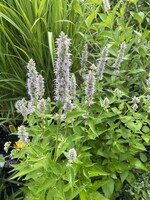
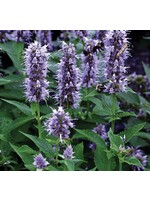
A pollinator favorite! Butteflies, bees, and hummingbirds all love Agastache. Small lavender flowers pop out from spikes above the aromatic foliage.
Beautiful lavender spikes of flowers that are loved by many pollinators! Hence he common name the anise scented foliage keeps deer and rabbits away.
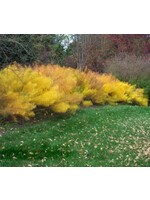
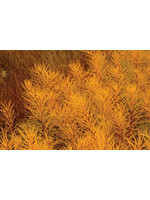
Perennial Plant of the Year 2011 This native perennial offers two seasons of beauty. The spring brings clusters of light blue flowers on top of the feathery foliage. In the fall the foliage turns a beautiful bright gold.
An improvement over the species with longer lasting flowers and more golden fall color. Steele blue flowers emerge in spring against green foliage. Fall brings golden yellow color accented by the red hued stems.
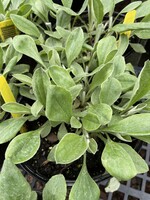
Have a dry, rocky, poor soil, sunny area that nothing wants to grow in? Pussytoes make a great ground cover for that kind of area! Short stems arise from the basal foliage in spring while the rest of the year the foliage is a nice soft silvery green.
A truly unique woodland flowers that almost looks like it belongs somewhere tropical. A single spike of green purplish flowers with a hooded sheath that cover the flowers. Bright red seeds are produced in summer while the rest of the plant goes dormant.
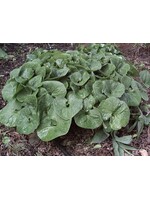
A native deciduous ground cover that has a strong spreading habit. Large heart shaped leaves that hide the maroon flower underneath them. Prefers shady areas. Deer and rabbit resistant. Grows 6-12 inches tall and 12inches wide.
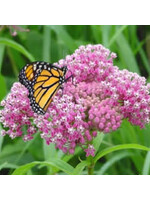
Awesome native plant! Perfect for sunny wet areas. Attractive clusters of tiny pink flowers attract pollinators, specifically being a larval host for Monarch butterflies.
A larval host for monarch butterflies this milkweed is the one most common seen along roadsides and naturalizing in meadows. Clusters of pinkish purple flowers are produced in summer that will be loved by all types of pollinators!
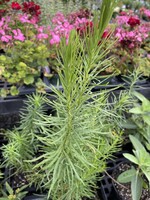
A white flowering native milkweed that has thin needle-like leaves. Most know the pink and orange milkweeds, while this is a lesser known species it is still a Monarch larval host! Add it to your other milkweeds for a mix of color!
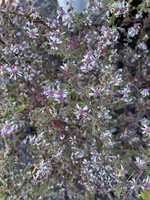
A good compact Aster with tons of semi-double purple blooms with yellow centers from late summer into fall. Loved by pollinators this is an excellent addition for late season pollinator gardens.
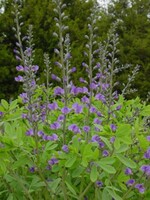
Perennial Plant of the Year 2010! Spring brings a flush of blue spikes of flowers that resemble lupines. Blooms will usually last into early summer then they start to form seed pods. These seed pods are a unique feature.
Striking yellow blooms will light up any garden! The flowers are reminiscent of Lupines. A long bloom time and pollinator magnet .
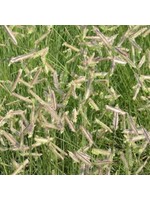
A nice smaller option for hard to plant dry sunny areas. Attractive blue green foliage that turns a golden brown in the fall. Distinctive flower and seed heads add a little extra interest in summer.
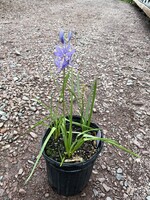
Blooming in early spring this native bulb produces light to dark blue violet star shaped flowers. Blooming from about April to June and then going dormant in the summer heat.
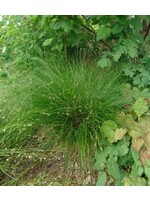
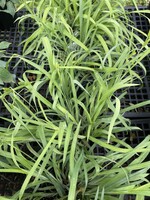
This native sedge is easy to grow and forms a ground cover in full to part shade, unlike many other sedges that prefer moist to wet soils Carex pensylvanica like dry to average moisture soils.
A nice low growing sedge that produces narrow light green foliage. Common name comes from the star shaped inflorescence that are quite attractive.
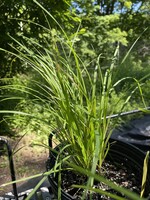
A fantastic sedge for rain gardens, stream bank restoration, or wet meadows. This species loves water, even shallow standing water. The bright green foliage is narrow and forms clumps (hence the common name tussocks).
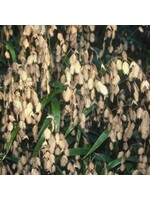
This native grass is probably the most tolerant of some shade. Produces handsome drooping seed heads that move in the slightest breeze. Grows 2-5' tall
White tubular flowers emerge in late summer and bloom through fall. Flowers will bloom in spikes from bottom to top. The blooms are reminiscent of a turtles head, which is where it gets its common name from. The Foliage is a dark glossy green.
This is an improved cultivar of the native Turtlehead. The flowers are a richer pink and the foliage is a darker green. Flowers bloom in spikes from bottom to top. Blooms late in the summer and makes a good source of pollen and nectar for pollinators.
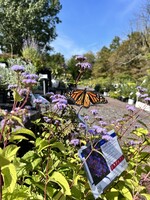
loads of blue airy flowers late summer till frost! An easy to grow late bloomer the pollinators love! This is a fast spreading plant making it great for naturalized areas. A gorgeous show of light blue adds a different color for late season plants. Prefer
Lily of the Valley is native to the mountain forests of the Southern Appalachians. This plant has small, dangly, white, bell-shaped flowers that bloom from April to June.