Your cart is currently empty
A semi-double flowering coneflower that start white and fade into a lemon yellow. A good addition to sunny beds or cut flower gardens.
The robin's plantain has aster-like white to pale violet flowers that blooms from April to June. A common species in North America. Attracts pollinators and good as a groundcover.
Robins Plantain is an early bloomer usually around April through June. The flowers range from white the pale pink in color. It forms a nice ground cover in sunny dry areas that can often be hard to plant.
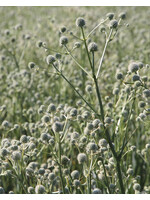
A tall perennial with unique perfectly round flower clusters that are greenish white. Flowers rise on sturdy stalks from foliage that looks somewhat like a Yucca plant. Can grow up to 6 feet tall.
This native plant is a butterfly magnet. Historically used in medical herb gardens since the foliage has medicinal properties. Grows to 4-6' tall and 3-4' wide in full to part sun.
This plant is a naturally occurring cross between Aster spectabilis and Aster Macrophyllus. The plants look more like a ground cover in the spring but then they shoot up and present the garden with lavender blue flowers on top of dark flower stems. grows
A tall native perennial that can get to 7 feet tall. Large domes of small pink lavender flowers sit atop strong stems with whorled leaves. A huge pollinators magnet! Its a great source of nectar for honeybees.
This is a smaller than the species Joe Pye weed. This cultivar grows 2-3' tall and only 1-2' wide. Great in rain gardens and deer resistant.
This Joe Pye Weed flowers earlier than other cultivars and its best feature is that its more compact. This eupatorium is small enough to fit in almost any landscape since it only grows to 24-32" tall and wide. Loved by butterflies, not liked by deer!
A native to wet moist areas this perennial flowers with can't miss pink clusters of flowers. Blooms are similar in appearance to Astible. Great for pollinator rain gardens.
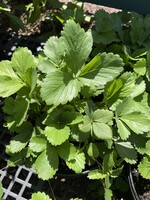
A herbaceous ground cover that spreads by stolons. Toothed foliage typical of strawberries with white flowers with yellow centers in spring. Produces edible fruit after flowering.
'Huggy Bear' adds beautiful burgundy foliage to the shade garden. Light pink flowers appear in April-May and provide a nice contrast against the dark foliage. 'Huggy Bear' is reported to have a better sun tolerance than the straight species, giving you a
a great woodland ground cover that has deeply lobed green leaves and pink lavender flowers for 5-6 weeks in spring. Flowers are liked by pollinators including some specialized bees and seeds are eaten by dong birds and other wildlife!
This perennial is a more compact version of its native parent, growing to approximately 2-3' tall. The flowers are single to double approximately 2-3" wide. Makes a nice cut flower since it has good stiff stems that also rarely need staking in the garden.
'Sultry Night' has ruffled foliage that is black with a purple overlay. The plant has small, light pink to white colored flowers that bloom in midsummer.
Perennial Plant of the Year 1991 Nice clump forming classic garden perennial. The deep purple foliage in the spring that matures to bronze over the summer. Grows to 15-24" tall best in some shade.
Named for its velvety, hairy foliage this is a nice ground-cover with attractive foliage. Typically the latest blooming Heuchera with blooms that are whitish pink.
This cross of coral bell and foamflower has amazing chartreuse foliage with red veins. The plants foliage is enough of a reason to plant it but it does flower too! Grows up to about 18" part to full shade.
'Powder Blue Giant' produces larger flower than the species that tend to be a paler blue. Blooms early in the season for nice early color and makes for a good ground cover as even after the bloom the foliage is a nice bright green.
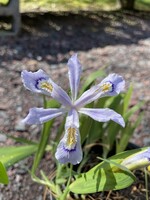
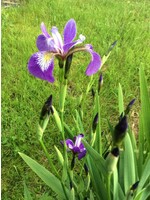
Native perennial iris blooms with bluish purple flowers on plants that reach about 30" tall. Thrives in medium to wet soils in full to part shade.
This native perennial is a hummingbird magnet with its scarlet red flowers. Thrives in oist soil and can grow 2-4' tall and 1-2' wide. tolerant of occasional flooding.
This native beebalm produces pink to white purple spotted flowers over grey green foliage. The leaves can be used to make tea. This variety of beebalm is thankfully fairly powdery mildew resistant but still a good idea to plant in spots that have good air