Your cart is currently empty
Light purple tubular flowers adorn this perennial from mid summer through fall. A great addition to pollinator or herb gardens that does well in dry harder to plant soils.
Definitely a unique looking native perennial. True flowers are green, yellow, or cream that typically have dark purple 'spots' on them. Showy bracts are pale pink to lavender in color. An awesome plant for pollinators.
This is the native form of pachysandra and a more responsible option than the invasive pachysandra terminalis. Grows 8-12" tall in full to part shade.
Whether you call it senecio or Packera it's still Golden Groundsel to us. This plant produces masses of yellow daisy like flowers held well above the shiny green leaves. Spreads and naturalizes nicely as a ground cover. Attracts loads of pollinators. Grow
This perennial has a large native range and is easy to grow in dry to average soil in full sun. White tubular flowers are attractive to not only us but to butterflies and hummingbirds as well!
Tough native cultivar thrives in our area. Sturdy square stems support the spikes of pink tubular flowers. It can spread so make sure you are ok with that before planting or plan to divide it often. Grows up to 38" tall in full sun.
A native ground cover that stays nice and short! At only 6 inches tall this rock star plant blooms from summer into early fall with purple/pink flowers. Attractive dissected foliage adds interest year round with its evergreen to semi-evergreen habit.
The mountain mints are listed on many “Top Ten Plants for Pollinators” lists
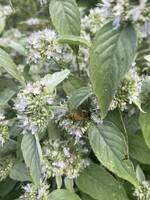
Pollinator magnet! If you want bee, butterflies and other pollinators you need Pycnanthemums!
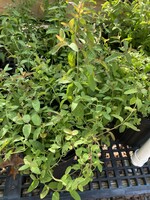
This native mountain mint is really a pollinator magnet! Our planting at the nursery is truly covered in countless pollinators during the summer. It is in the mint family but not as aggressive as other mints. It will spread but can be controlled but cutti
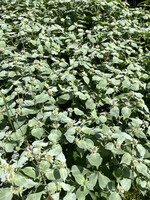
If you want to attract pollinators- plant pycnanthemum! Extremly hardy and easy to grow. Best used for naturlizing since it does spread.
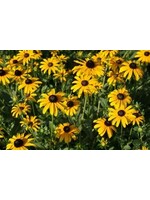
A heavy flowering Rudbeckia with a long bloom time all through summer into fall. This staple will attract all sorts of pollinators to your garden!
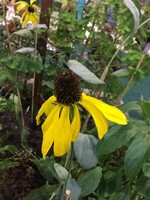
Also known as large coneflower. This plant sports nice large glaucous bluish-green paddle shaped leaves. It can reach 7' tall. Best to leave the spent flowers and seed heads for the goldfinches to feast on.
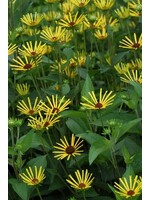
This cultivar was discovered growing in the wild. The flower petals are curled which creates a quilled effect.
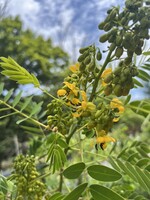
A tall native that provides the garden with bright yellow flowers in summer and attractive foliage. Not only will Senna attract pollinators, but it is also a larval host for Sulphur butterflies.
This low grass forms attractive tufted mounds of attractive arching foliage. The silvery plumes that rise above fade to gold in the fall and sway nicely in the breeze. Very adaptable and even deer resistant. If you have ever admired the plantings on New
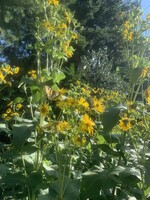
Big bold and beautiful! this plant needs lots of room! The square stems with opposing leaves that attach to the stems by wrapping around it forming a cup, hence the name. In our planting at the nursery the flowers are covered in pollinators and the birds
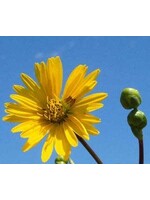
Nice tall yellow flowering native wildflower.
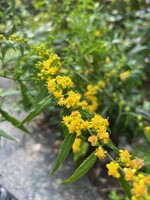
One of the only goldenrods to tolerate shade -an excellent selection for a wooded area. Popular with the pollinators.
Awesome plant for bees and butteflies! Small golden yellow blooms on thin leafed foliage. A fragrant plant that is known for smelling like anise when the leaves are crushed.
A late flowering deep purple semi double flowers that attract pollinators. 'Purple Dome' has a more compact habit compared to other Asters standing at 18-24 inches tall. It maintains a nice mounded habit to fit in any garden.
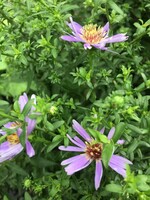
Mt Cuba Center says: "one of our most reliable native perennial asters. It has a strikingly beautiful mounded appearance with masses of violet-blue, daisy-like flowers on 2-3’ tall multi-stemmed plants in mid to late autumn" Grows 24-36" Height
This indigenous plant appears naturally in a multitude of conditions from Roadsides, meadows, woodsides, and along streams. It's a great adaptable plant for many settings. Grows in Sun to shade and can handle dry or moist soil. This plants resolve to grow
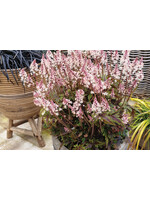
'Angel Wings' features deeply lobed foliage that is mostly burgundy with green edges. The flowers emerge around May and are white-pink spikes that rise above the foliage.