Your cart is currently empty
A medium sized tree that has some unique features and is versatile as it can handle many different light levels and soil. Known for its fruits that look like hops, seen on the tree in summer to winter.
A native small tree or large shrub that produces copious amounts of white flowers in spring that will eventually turn to red fruit in late summer/early fall.
This native cherry tree has loads of 6" long pendulous clusters of fragrant white flowers. The flowers give way to small (3/8") red fruits that ripen to dark purple.
Also known as narrow leafed mountain mint
If you want to attract pollinators- plant pycnanthemum! Extremly hardy and easy to grow. Best used for naturlizing since it does spread.
Terrific Native tree that can be planted now and will be around for generations to come! Make sure that you have room for this tree since it can reach 100 feet tall.
Nice native white oak tree! The leaves emerge bronze in color, turn dark green over the summer and then a yellow to red fall color. The common name of Swamp white Oak would make you believe that it only can handle wet soil but it can do fine in average so
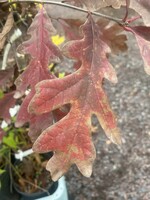
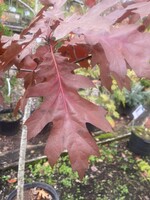
Easy to grow large shade tree for average to dryer sites. Matures to about 70' tall. Nice deeply cut glossy green leaves all summer turning scarlet in the fall. Makes a really nice stately shade tree that can be enjoyed for generations.
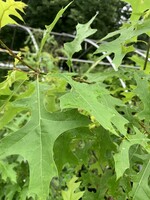
A large shade tree with handsome glossy green foliage in summer that transitions to a beautiful scarlet red in fall. Oaks are known for being supportive to the most wildlife.
Very popular and common native Oak tree in our area and for a good reason- IT DOES WELL It is a large shade tree reaching up to 70 feet tall. The branches of mature trees grow up at the top, out at the middle and down at the bottom. This growth habit giv
Very popular and common native Oak tree in our area and for a good reason- IT DOES WELL It is a large shade tree reaching up to 70 feet tall. The branches of mature trees grow up at the top, out at the middle and down at the bottom.
Bright, bold blooms that can range from any combination on red, orange, and yellow. This species is often used as a parent of many Hybrid deciduous azaleas!
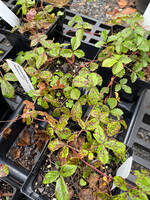
An unusual form of Rubus that produces woody trailing stems rather than the typically cane. Similar to other blackberry or raspberry species the stems can form roots when they touch the ground so it can naturalize pretty easily.
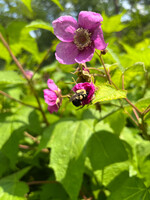
It is known for its showy, fragrant purple flowers that bloom from June to August, arguably making it one of the most beautiful raspberry shrubs. The leaves are large and deeply lobed, which adds to the beauty of the shrub. This species produces edible be
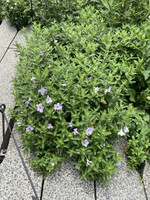
Lavender petunia like flowers bloom through summer into fall on this hardy perennial. A low growing plant that spreads well making it a great native ground cover!
A multi stemmed larger shrub known for its soft velvety catkins that appear before it leafs out. One of the first willow catkins to appear in the spring. Catkins are often used in flowers arrangements.
Thin-leafed foliage that is light green and loves wet soil. Yellow catkins can be seen in early spring. The bark is dark and heavily textured.
Thin-leafed foliage that is light green and loves wet soil. Yellow catkins can be seen in early spring. The bark is dark and heavily textured. Black willow is a fantastic wildlife plant! It is a host plant to 289 different species of caterpillars.
This is a woodland goldenrod that is very shade tolerant! This late season bloomer is a pollinator magnet with its spikes of small bright yellow flowers.
Awesome plant for bees and butteflies! Small golden yellow blooms on thin leafed foliage. A fragrant plant that is known for smelling like anise when the leaves are crushed.
This native grass does great in hot dry conditions. Forms a nice mound of fine textured deep green foliage. Looks great in mass plantings! Produces seed heads that are enjoyed by birds. Really nice fall and winter color.
This is a small understory tree that can be planted in the shade! Bladdernut produces clusters of white bell-shaped flowers in the spring, usually around April/May. After the spring bloom, it starts working on the seeds.
A native shrub that produces white berries that often persist into winter, unless the birds get to them first!
Now officially know as Symphyotrichum novae-angliae but we are still calling it an aster, its so much easier to say. Great for naturalizing and for rain gardens. Grows to 3-6' tall in full sun.